Brushing your teeth twice a day is one of the most important habits for maintaining good oral health. It helps remove food particles, bacteria, and plaque from your teeth and gums. But even people who brush regularly may notice a hard, rough substance building up around their teeth.
This substance is known as tartar, also called dental calculus.
Many people wonder why tartar develops despite brushing every day. The answer lies in the difference between plaque and tartar. While regular brushing can help remove soft plaque, it cannot effectively remove tartar once plaque has hardened.
Understanding why tartar forms, why brushing cannot remove it, and how professional dental cleaning can help is an important part of maintaining healthy teeth and gums.
If you are looking for professional dental care in Dubai, you can explore General Dentistry at Renew & Revive Polyclinic to learn more about available dental services.
What Is Plaque?
Plaque is a thin, sticky layer that continuously forms on the surface of your teeth. It contains bacteria, saliva, and tiny particles from the foods and drinks you consume.
You may not always notice plaque because it can be almost invisible.
When plaque remains on the teeth, the bacteria within it can contribute to tooth decay and gum irritation. This is why regular brushing and cleaning between the teeth are essential.
The good news is that soft plaque can usually be removed with proper daily oral hygiene.
However, if plaque is not removed effectively, it can begin to harden.
What Is Tartar?
Tartar is hardened or mineralised plaque.
Saliva naturally contains minerals, and these minerals can combine with plaque that remains on the teeth. Over time, the plaque can become hard and firmly attached to the tooth surface.
Once this happens, brushing alone is no longer enough.
Tartar may develop:
- Along the gumline
- Between the teeth
- Behind the lower front teeth
- On the inner surfaces of teeth
- Around existing dental restorations
It can appear yellow, brown, or darker depending on factors such as staining and how long it has been present.
Why Doesn’t Brushing Remove Tartar?
The main reason is simple: a toothbrush is designed to remove soft plaque, not hardened deposits.
When plaque is fresh, brushing and interdental cleaning can physically disrupt and remove it.
Once minerals have hardened the plaque, however, the deposit becomes firmly attached to the tooth.
Brushing harder does not solve the problem.
In fact, aggressive brushing can irritate the gums and may contribute to enamel wear or gum recession. Therefore, applying more pressure is not an effective or recommended way to remove tartar.
Professional dental cleaning uses specialised instruments to remove hardened deposits safely and thoroughly.
Does Brushing Still Help If You Already Have Tartar?
Absolutely.
The fact that brushing cannot remove existing tartar does not mean brushing is unnecessary.
Daily brushing remains extremely important because it helps remove newly formed plaque and reduces the amount of plaque that can accumulate around existing tartar.
Think of it this way:
Brushing helps prevent plaque from becoming more tartar, while professional cleaning helps remove tartar that has already formed.
Both professional care and daily home care therefore have important roles in maintaining oral health.
What Happens If Tartar Is Left Untreated?
Tartar is more than just an unwanted buildup on your teeth.
Its rough surface can provide additional areas where plaque can accumulate. This can make it more difficult to maintain clean teeth and healthy gums.
Tartar around the gumline may contribute to gum inflammation.
Early gum problems can involve symptoms such as:
- Red or swollen gums
- Bleeding while brushing
- Gum tenderness
- Persistent bad breath
- Increased sensitivity
- Changes in the gumline
If these problems continue without appropriate attention, gum disease can become more serious.
This is one reason why regular dental examinations and professional cleaning are important.
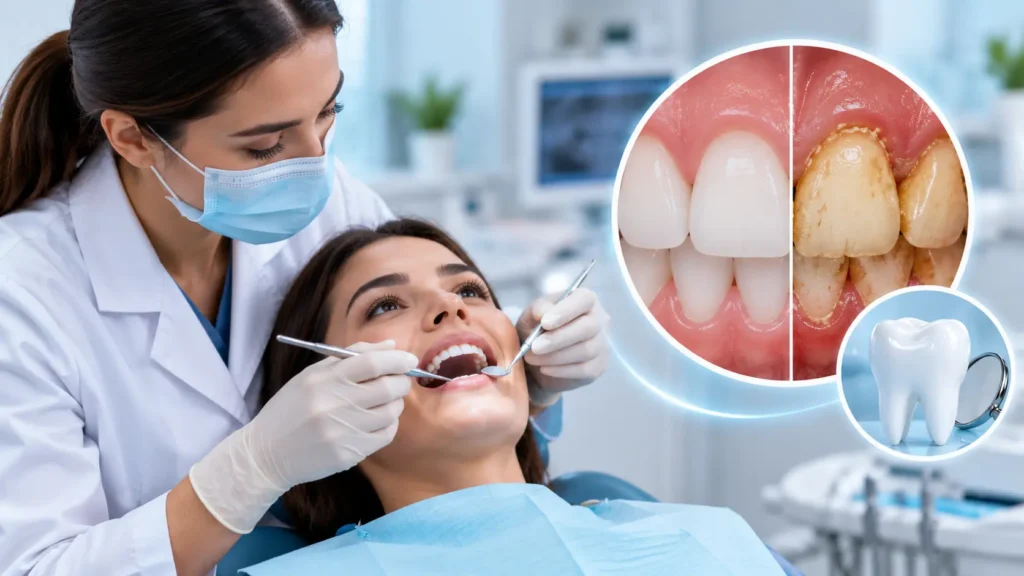
Tartar and Gum Health
Your gums are an important part of your oral health. They provide support around your teeth and help protect the tissues surrounding them.
When plaque and tartar accumulate near the gumline, the gums can become irritated.
You may notice bleeding when brushing or flossing. Some people ignore this because they assume bleeding gums are simply a normal part of brushing.
However, persistent gum bleeding should not be ignored.
A dental professional can examine your gums and determine whether there is inflammation or another underlying concern.
Professional cleaning can also remove hardened deposits that cannot be effectively eliminated through normal brushing.
Can Flossing Remove Tartar?
Flossing and other forms of interdental cleaning are extremely useful for removing plaque and food particles from between the teeth.
However, they cannot reliably remove established tartar.
If tartar has already hardened between your teeth, professional dental instruments may be required to remove it.
Even so, cleaning between your teeth every day is very important.
Regular interdental cleaning helps remove plaque before it has an opportunity to harden and become tartar.
Depending on your individual dental needs, your dentist may recommend traditional dental floss, interdental brushes, or another suitable cleaning method.
Can Mouthwash Dissolve Tartar?
Mouthwash can be a useful addition to an oral hygiene routine, depending on the product and your individual needs.
However, mouthwash should not be viewed as a replacement for brushing, interdental cleaning, or professional dental cleaning.
Once plaque has hardened into tartar, a mouthwash cannot simply dissolve the deposit and make it disappear.
For this reason, mouthwash should be considered an additional oral hygiene product rather than a tartar-removal solution.
Why Does Tartar Build Up Faster in Some People?
Not everyone develops tartar at the same rate.
Several factors can influence how quickly plaque accumulates and hardens, including:
Saliva Composition
The minerals naturally present in saliva can contribute to the formation of tartar.
Oral Hygiene Habits
Inadequate brushing or inconsistent interdental cleaning can allow more plaque to remain on the teeth.
Tooth Position
Crowded or overlapping teeth can create areas that are harder to clean effectively.
Diet
Frequent consumption of sugary foods and drinks can contribute to plaque and tooth decay.
Tobacco Use
Smoking and other tobacco products can affect oral health and contribute to staining and gum problems.
Dry Mouth
Reduced saliva flow can change the oral environment and may increase the risk of certain dental problems.
Because every person’s mouth is different, some individuals may need professional cleaning more frequently than others.
Why Professional Dental Cleaning Is Important
Professional dental cleaning is designed to remove plaque and hardened deposits that cannot be adequately removed through everyday brushing.
During a cleaning appointment, a dental professional can carefully assess your teeth and gums and remove accumulated tartar.
Professional cleaning may also help identify areas where plaque is repeatedly accumulating.
Your dental professional can then give you personalised recommendations for improving your home-care routine.
This combination of professional care and daily oral hygiene can help you maintain healthier teeth and gums.
You can explore the clinic’s full range of dental and healthcare services in Dubai to learn more.
Don’t Try to Remove Tartar Yourself
When people notice tartar, they may be tempted to scrape it off using sharp objects or dental tools purchased online.
This is not recommended.
Trying to remove tartar yourself can potentially:
- Injure the gums
- Cause bleeding
- Scratch tooth surfaces
- Damage dental restorations
- Introduce bacteria into damaged tissue
- Make an existing dental problem worse
Professional dental instruments and techniques are designed specifically for removing hardened deposits while reducing the risk of unnecessary damage.
If you have noticeable tartar, professional cleaning is a safer approach.
How Can You Reduce Tartar Buildup at Home?
While brushing cannot remove established tartar, good oral hygiene can help reduce the amount of plaque that eventually turns into tartar.
1. Brush Twice a Day
Brush your teeth twice daily using fluoride toothpaste.
Use gentle, controlled movements rather than applying excessive pressure.
Make sure you clean the front, back, and chewing surfaces of your teeth.
2. Clean Between Your Teeth
Use dental floss or another interdental cleaning method to remove plaque from areas your toothbrush cannot reach effectively.
3. Pay Attention to the Gumline
Plaque commonly accumulates around the gumline. Spend enough time cleaning this area gently.
4. Limit Frequent Sugary Foods and Drinks
Reducing frequent exposure to sugary foods and beverages can support better oral health.
5. Drink Plenty of Water
Water is a good everyday beverage and can help rinse food particles from the mouth.
6. Maintain Regular Dental Visits
Even an excellent home-care routine cannot replace professional dental examinations and cleaning.
Regular appointments allow your dental professional to monitor your teeth and gums and identify problems early.
Preventive healthcare is an important part of long-term wellbeing. You can learn more about the clinic’s approach through its Preventive Medicine services.
How Often Should You Get Professional Dental Cleaning?
There is no single cleaning schedule that is appropriate for everyone.
Your dental professional can recommend a frequency based on factors such as your oral hygiene, tartar buildup, gum health, previous dental problems, and individual risk factors.
Some people may need professional cleaning more frequently, while others may require it less often.
The important thing is to avoid waiting until tartar becomes extensive or you develop symptoms.
Signs You May Need a Dental Check-Up
Consider arranging a dental appointment if you notice:
- Hard deposits on your teeth
- Yellow or brown buildup around the gumline
- Bleeding gums
- Red or swollen gums
- Persistent bad breath
- Tooth sensitivity
- Tooth pain
- Gum recession
- Loose teeth
- Changes in your bite
- Difficulty keeping certain areas of your teeth clean
Even if you have no obvious symptoms, routine dental check-ups can help maintain your oral health.
Tartar Prevention Starts With Daily Habits
The most effective approach to managing tartar is prevention.
Brushing twice a day, cleaning between your teeth, maintaining a balanced diet, drinking water, avoiding tobacco products, and attending regular dental appointments can all contribute to better oral hygiene.
Remember that brushing is not supposed to remove established tartar.
Its primary role is to remove plaque before it has the opportunity to harden.
Once tartar has formed, professional dental cleaning is generally needed to remove it.
Dental Care in Jumeirah 3, Dubai
If you live in Jumeirah 3 or nearby areas of Dubai and are concerned about tartar buildup, gum health, or your general oral hygiene, professional dental care can help you understand your individual needs.
Renew & Revive Polyclinic provides healthcare and dental services in Dubai, including general dentistry.
You can contact Renew & Revive Polyclinic to enquire about dental care and appointments.
📍 Location: Jumeirah 3, Dubai, UAE
📞 Phone: +971 52 524 9318
🌐 Website: www.renewandrevivepolyclinic.com
For more useful healthcare information, you can also explore the clinic’s health and wellness blog.
Keep Your Teeth Clean Beyond Brushing
Brushing is one of the foundations of good oral hygiene, but it cannot do everything.
Soft plaque can generally be removed through effective brushing and interdental cleaning. Once plaque becomes mineralised and turns into tartar, however, it becomes firmly attached to the tooth and usually requires professional removal.
Rather than brushing harder or trying to scrape tartar away yourself, focus on consistent daily oral hygiene and regular professional dental care.
Healthy teeth start with daily habits, while professional dental care helps keep your smile on the right track.
If you notice tartar, bleeding gums, sensitivity, or other changes in your mouth, consider arranging a dental check-up with a qualified professional.
Renew & Revive Polyclinic – Jumeirah 3, Dubai
📞 +971 52 524 9318
🌐 www.renewandrevivepolyclinic.com